

Amazon
Delkim Txi-D v2 Presentation Set
Delkim's flagship piezo vibration alarm with 32 tones, six LED colours and the Rx-D v2 receiver.
View full specs (Delkim Txi-D v2 Presentation Set)Independent UK bite alarm guides
How modern alarms sense a take, what every number on the spec sheet means, and side-by-side specifications for Delkim, Fox, Nash, Wolf, Steve Neville and the rest of the UK market.

A bite alarm is an electronic device that sits under a fishing rod and sounds when the line moves. It lets carp, tench, barbel and other specimen anglers fish static baits for hours, often overnight, without watching the rod tip.
The rod rests in a V-shaped cradle on top of the alarm, and the line runs across a sensor: usually a magnetic roller wheel, or a piezo vibration sensor on Delkim alarms. Movement becomes a bleep and an LED, with a different tone when a fish swims towards you.
Most modern alarms also transmit by radio to a receiver in the bivvy, and the newest add rechargeable power, smarter sensing and anti-theft alerts.
From how an alarm senses a take to setting it up, choosing one and reading the spec sheet.
The technology
Every alarm turns line movement into a signal. How it senses that movement decides how it copes with drop-backs, liners, wind, rain and frost.
Most alarms use a roller wheel. Delkim pioneered vibration sensing, Wolf combines the two, and Nash and Trakker now add processing designed to ignore waves.
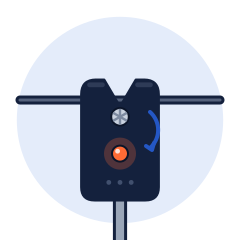
Type 1
Magnets in a wheel pass a sensor as the line turns it. Simple and predictable.

Type 2
A piezo sensor feels vibration in the line, with no moving parts in the sensing path.
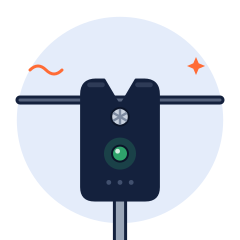
Type 3
Vibration plus a wheel, or speed and wave processing to filter rough water.

Plus
Hear every take in the bivvy, with tone and LED colour copied from each alarm.
Three flagship approaches: Delkim vibration sensing, Nash speed and wave sensing, and Wolf rechargeable power. Every alarm page has a full spec sheet.
Delkim's flagship piezo vibration alarm with 32 tones, six LED colours and the Rx-D v2 receiver.
View full specs (Delkim Txi-D v2 Presentation Set)Nash's flagship alarm, built around speed-responsive sensing, with a USB-C rechargeable receiver rated beyond…
View full specs (Nash Siren R4 Bite Alarm)A compact UK-made alarm with a 1000 mAh rechargeable battery, USB-C charging and HUBB receiver link.
View full specs (Wolf Icon X1 Bite Alarm)As an Amazon Associate we earn from qualifying purchases. Some other links on this site are affiliate links too; it never changes the price you pay.
Answer these in order and the shortlist writes itself. Our buying guide covers each step in depth, with suggestions at four budgets.
Overnight or away from the rods? You need transmitting alarms.
Roller wheel for most; vibration, dual or wave sensing for tough conditions.
PP3, AAA, CR2 or USB-C: match what you already carry.
Use our table to compare range, pairing, LEDs and build.
Sensing, power, receiver, range and stand-out features for every alarm we cover, from Delkim and Wolf to Korum and JRC, with a link to each full spec sheet.
Sensing ·
Alarms used to react to any movement. The newest ones look at how the line moves, so wind, swell and undertow stop waking you at 3am.
Power ·
Wolf's Icon X1 charges by USB-C and Nash's R4 receiver does too. We look at what rechargeable power changes on the bank.
Receivers ·
Receivers have quietly become the cleverest part of the system. Here are the new features, which brands have them and which are worth paying for.
A bite alarm sits under the rod with the line running across a sensor. When a fish moves the line, the sensor (usually a magnetic roller wheel, or a vibration sensor on Delkim alarms) sends pulses to the electronics, which sound a bleep and light an LED. Read how bite alarms work.
Only if you fish away from your rods or overnight. A receiver plays your alarms' bleeps in the bivvy so you can turn the heads down. For day sessions beside the rods, standalone alarms are enough. Receivers explained.
Neither is simply better. Vibration alarms such as Delkims register very small movements and have no wheel to freeze; roller wheel alarms give a predictable reading that is less affected by wind and rain. Compare them.
Makers quote from about 100 m (Prologic BAT+, Korum KRI) to over 750 m (Nash R4), but these are open-ground figures. Trees, banks and your bivvy reduce real range, so test the receiver from where you'll sit. What affects range.
Lower the sensitivity one step at a time, add weight to your indicator, keep the rod tip low, and make sure the line isn't rubbing on the alarm. Alarms with wave or Intelli-Sense modes can filter wave action. Set-up guide.
A drop-back happens when a fish swims towards you, the line goes slack and the indicator falls. Most alarms signal it with a falling or different tone, and some flash the LED instead of holding it solid.
Launches, spec changes and guides for carp anglers. No spam, unsubscribe any time.


